Tag: technology

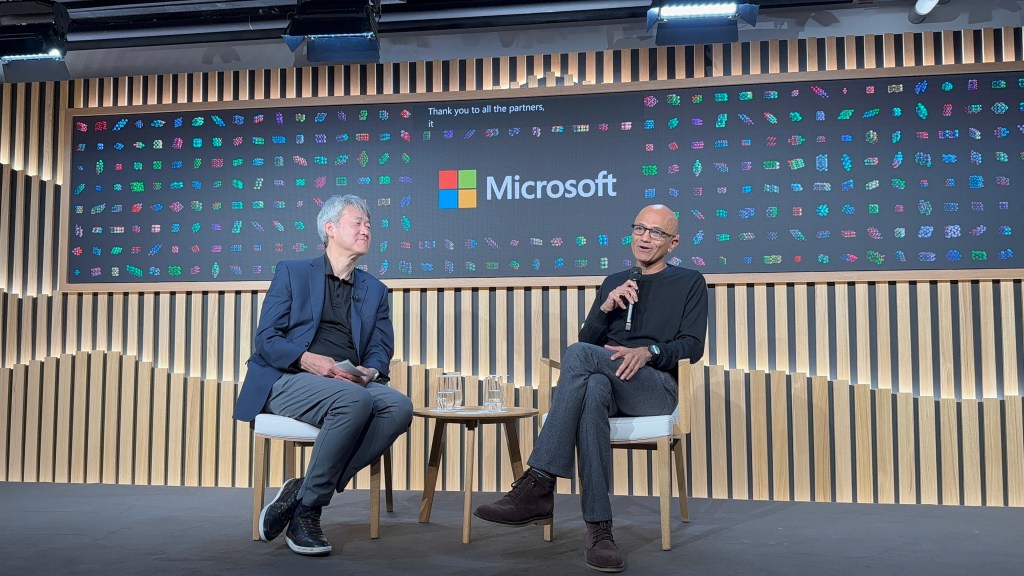
  • Davos2026: Breakfast with Satya Nadella and Peter Lee

    Davos2026: Breakfast with Satya Nadella and Peter Lee

    250 Years of Science in 25: How AI is Cracking the “Language of Nature”

    Introduction: The Open Future

    Ninety years ago, against the backdrop of the 1930s—a decade defined by profound geopolitical turbulence and the gathering shadows of global conflict—the philosopher Karl Popper formulated a radical directive: “Optimism is a duty.” He argued that the future is not a predetermined track we must passively ride, but an open landscape we actively construct through our intentions and actions.

    Today, as we gather in Davos amidst our own era of “polycrisis” and turbulent conditions, Popper’s philosophy remains our most vital compass. The central challenge of our age is that the traditional, linear pace of scientific discovery is too slow to solve the exponential threats we face, from climate change to emerging pathogens. However, we are now standing at the precipice of a historical pivot. By fusing AI with the nascent power of Quantum computing, we are moving from a linear progression to a nonlinear acceleration. We are finally beginning to decode the “language of nature,” positioning ourselves to compress 250 years of scientific advancement into the next 25.

    Takeaway 1: Optimism is a Duty, Not a Luxury

    For the modern strategist, optimism is not a soft sentiment or a passive hope; it is a functional necessity. In the context of “AI for Science,” optimism represents the intent to determine a better future rather than merely observing the turmoil of the present. This mindset is the prerequisite for scientific breakthroughs—it is the belief that the “unsolvable” is merely a problem awaiting a new computational paradigm.

    “Optimism is a duty. The future is open. It is not predetermined. We all contribute to determine it by what we do.” — Karl Popper

    By embracing this duty, leaders and scientists shift their focus from the diffusion of technology to its intense application in the places where it matters most.

    Takeaway 2: Compressing the Timeline (250 Years in 25)

    The overarching mission of Microsoft Research is to fundamentally alter the mathematics of discovery. For centuries, progress was restricted by the limits of human observation and manual experimentation. We are now entering the era of “AI for Science,” where artificial intelligence acts as a superpower that transcends human cognitive bottlenecks.

    We are transitioning from trial-and-error discovery to a predictive era where simulation replaces the lab, compressing 250 years of chemistry into 25.

    This compression allows us to move beyond the incremental, allowing for a leap in progress that could solve for room-temperature superconductors or carbon-capture materials in a fraction of the historical time.

    Takeaway 3: Hunting the “Divine Function” in Chemistry

    Since the 1920s, chemistry has labored under a profound frustration. We have possessed Schrödinger’s equation—a mathematical description of matter with “exquisite precision”—yet we have lacked the power to solve it for anything complex. Even a simple caffeine molecule, with its 100 electrons, remains out of reach for direct calculation because the computational cost grows exponentially with every electron added.

    For sixty years, scientists relied on the “Zoo”—a collection of over 800 handcrafted approximations used to estimate the “Exchange Correlation Functional,” also known as the “Divine Function.” While these approximations were highly cited, they were limited; they could explain the past but not predict the future.

    The Scala model represents the end of the Zoo. Unlike traditional models, Scala utilizes a proprietary dataset more than an order of magnitude larger than all public data combined and employs a unique architecture specifically optimized for scaling (not a standard transformer).

    * From Explanatory to Predictive: Scala has achieved “chemical accuracy” (1 kcal/mol), the threshold at which AI moves from interpreting old experiments to designing entirely new molecules and materials in a virtual environment.
    * The Divine Function Found: By using deep learning to “hunt” the universal functional, we are replacing noisy laboratory experiments with high-fidelity computer simulations.

    Takeaway 4: The Rise of the “Virtual Patient” and AI Trials

    The current state of medical discovery is an exercise in inefficiency: a single Phase 3 clinical trial can cost over $100 million and take years, yet it often excludes the vast majority of the population. Through Trioscope and Universal Medical Abstraction, we are seeing the birth of the “Virtual Patient.” This technology uses frontier AI to ingest unstructured hospital data—messy faxes, PDFs, and noisy records—and structure it into actionable insight in seconds.

    The three core benefits of Virtual Trials include:

    * Speed: Clinical data abstraction that previously took experts hours is now completed in seconds.
    * Cost: The cost of processing patient data has plummeted from hundreds of dollars to just a few cents per record.
    * Health Equity: Traditional trials often ignore the 85% of cancer patients treated in rural or community hospitals; AI-driven virtual trials finally bring these underserved populations into the fold of medical discovery.

    Takeaway 5: Decoding the “Tumor Microenvironment” with GigaPath

    Immunotherapy is the most promising tool in the fight against cancer, yet it requires decoding the “grammar” of the tumor microenvironment—the complex interaction between immune cells and tumor cells. Mapping this usually requires “spatial proteomics,” a process far too expensive for mass application.

    Microsoft’s foundational model, GigaPath—already a standard in the field with 2 million downloads—serves as the base for GigaTime. GigaTime simulates expensive spatial tests using “dirt cheap” microscopic slides already found in routine care.

    * Scale: Researchers used this to create a virtual population of 14,000 cancer patients and 300,000 virtual tissue slices.
    * Discovery: This population-scale study uncovered over 1,000 significant associations between cell states and clinical outcomes, a feat that was previously unthinkable for human researchers.

    Takeaway 6: A Platform is a “Bicycle for the Mind” (and More)

    In the 1980s, the PC was famously described as a “bicycle for the mind.” Today, AI and Quantum platforms have evolved into “infinite minds,” allowing us to orchestrate agentic workflows that handle the drudgery of data so humans can focus on the “intent” of discovery. For a technology to be a true platform, however, its value must be democratized.

    “A platform is only a platform if the value created on the platform is higher than the value captured by the platform.” — Satya Nadella

    As we move up the abstraction chain, from assembly code to high-level languages to natural language, the ultimate abstraction is intent. Scientists will soon use “Discovery” platforms as a toolchain to accelerate everyday research, similar to how GitHub Copilot has transformed the world of coding.

    Conclusion: The Challenge of the “Capability Overhang”

    We find ourselves in a moment reminiscent of the Industrial Revolution—a period of “magic” that changes the trajectory of human history. Yet, we face a “capability overhang”: our technological potential is advancing nonlinearly, but our real-world implementation remains stubbornly linear.

    The tools to compress 250 years of science into 25 are here. We can now simulate the atomic world, model virtual patients, and decode the grammar of disease. The question is no longer one of technical feasibility, but of institutional and regulatory will. We must bridge the gap between “diffusion” and “real-world impact” by applying these tools intensely where they matter most.

    The future is open. It is our duty to step up and determine it.
  • Key Messages from WEF Davos 2025: Insurance Industry and the Trust Economy

    The World Economic Forum (WEF) Annual Meeting 2025 in Davos – themed “Collaboration for the Intelligent Age” – highlighted a convergence of technological innovation, economic shifts, and an urgent call to rebuild trust in global markets .

    For the financial services and insurance sector, the discussions underscored that we are at a pivotal moment.

    Emerging economic trends show steady but lower global growth (around 3.3% in 2025, below historical averages) , meaning insurers must seek new avenues of value. Technology, especially artificial intelligence (AI) and blockchain, is redefining business models across industries, making innovation and agility non-negotiable . At the same time, leaders stressed that trust – the confidence of consumers, businesses, and regulators – is the cornerstone of the future financial ecosystem . In this evolving “economy of trust,” transparency, security, and reliability become critical assets, enabling new forms of digital transaction and partnership.

    Key messages from Davos 2025 for insurers center on embracing innovation while strengthening trust.

    Panels and experts emphasized the rise of AI-driven services, decentralized finance (DeFi), and sustainability-oriented finance as transformative forces. They also warned of rising cyber risks and trust gaps that could undermine these advancements if not addressed . To thrive, insurance companies should prepare for a new wave of economic transformation by adopting AI and data analytics for smarter risk modeling, engaging with fintech and DeFi platforms, and developing insurance solutions linked to sustainability goals. Equally important is cultivating trust – through robust digital identity and security frameworks, ethical AI use, customer-centric product design, and cross-sector collaboration. This report distills the Davos insights most relevant to insurance and outlines strategic, actionable steps. It concludes with a speech outline to inspire insurance leaders to embrace these changes, positioning their organizations for success in the emerging trust-based economy.

    Key Insights from Davos 2025 (Financial Services & Trust Economy)

    Economic Outlook & Digital Transformation: Global growth is projected to hover around 3.3% in 2025-26, below the 3.7% historical average . With this subdued outlook, the search for new growth frontiers was a major Davos theme. The digital economy is expected to fill much of that gap – it already accounts for ~15.5% of global GDP and an estimated 70% of new economic value over the next decade will be created on digitally-enabled platforms . This signals that insurers must innovate beyond traditional products. In practice, that means leveraging technology and data to tap into digital markets and ecosystems for growth. In short, tech-driven innovation is becoming the engine of financial growth, especially as geoeconomic shifts (debt, demographics, and geopolitics) pressure traditional revenue streams.

    Technology as a Primary Driver – AI’s Promise and Challenge: Rapid technological change was described as the primary driver of industry disruption in the “Intelligent Age” . Artificial intelligence dominated the agenda as a transformative force for banking and insurance alike. Experts noted AI could raise productivity in financial services by up to 40% through automation by 2030 , and generative AI alone could add $200–$340 billion in value annually . Real-world examples shared at Davos included banks using AI to cut loan approval times to under a minute and machine learning preventing $1 billion in fraud each year – innovations directly applicable to insurance (for instance, in underwriting and fraud detection). However, alongside the optimism, leaders acknowledged an execution gap: 96% of CEOs see AI as a major opportunity, yet only 17% feel their AI investments have exceeded expectations . This highlights that many insurers are still stuck in “pilot purgatory” – experimenting with AI in silos but struggling to scale solutions enterprise-wide . The key Davos takeaway is that insurers must move “beyond experimentation” to full AI integration, modernizing legacy systems and upskilling teams so AI-driven risk models and personalized services can truly transform their business.

    The Trust Economy – Rebuilding Confidence in Financial Ecosystems: Trust emerged as a central theme across Davos discussions. As one WEF insight put it, “Trust is the cornerstone of finance, and in a digital world, it must evolve” . In today’s environment, confidence underpins everything from customer adoption of fintech apps to the willingness of businesses to share data. Yet trust is under strain – cyber threats and data breaches are on the rise, threatening to erode confidence. Notably, the global cost of cybercrime is projected to increase by 50% from 2024 to reach $13.8 trillion by 2028 . Leaders warned that hard-won customer trust “can be shattered in seconds by a cybersecurity breach” . To address this, Davos experts advocated for robust digital trust frameworks: secure digital identity, data privacy standards, and stronger cyber resilience across the financial system . By adopting such frameworks, financial institutions (including insurers) can reduce friction and foster a new era of trusted transactions . In practice, this means insurers need to double down on cybersecurity, ensure ethical use of customer data, and increase transparency in AI-driven decisions to maintain stakeholder trust. Rebuilding trust also has a macro dimension: WEF’s Global Cooperation report noted improving collaboration on global issues, but fragmentation remains . For insurers, collaborating with governments and tech firms on standards (for example, to combat fraud or share threat intelligence) will be key to strengthening trust in the broader financial ecosystem.

    Decentralized Finance (DeFi) and New Financial Infrastructure: Davos 2025 also shone a light on the growing impact of decentralized finance and digital assets. Digital assets – from cryptocurrencies to tokenized real-world assets – are creating a borderless financial system operating 24/7 . These innovations, built on blockchain and distributed ledger technology, promise greater efficiency and inclusion, but also pose new challenges. Forum discussions highlighted that while DeFi platforms can “reimagine traditional financial services” in a more open, permissionless way , they exist in a fragmented ecosystem. A key insight was the push for “unified ledger” approaches that bridge public and private blockchains, delivering scale and security without sacrificing transparency . Such infrastructure could unlock mainstream use of DeFi, enabling new insurance models (e.g. peer-to-peer risk pools or smart-contract based policies). For insurers, the message is twofold: engage with the rise of DeFi and digital assets, and help shape it. This might involve insuring crypto assets or exchanges (an emerging market opportunity) and using blockchain in insurance processes (for instant verifiable claims payouts via smart contracts). Crucially, Davos experts cautioned that harnessing these opportunities requires responsible innovation under robust oversight. Combining innovation with sensible regulation was deemed essential to manage risks like volatility and fraud in DeFi . Insurers should therefore prepare by building internal expertise on digital assets, participating in industry sandboxes or consortiums on blockchain standards, and advocating for frameworks that enable innovation while protecting consumers. The “economy of trust” in a decentralized context will depend on insurers helping provide a safety net and credibility to new financial networks.

    Sustainability and Resilience – Toward Sustainability-Linked Insurance: Climate change and sustainability were front and center at Davos, and their linkage with finance was repeatedly emphasized. WEF leaders noted that climate risks are no longer abstract future threats; they are impacting economies today (2024 was the hottest year on record, with severe wildfires and storms affecting communities and property) . This has direct implications for insurance: more frequent extreme events threaten insurability in some regions and are contributing to the emergence of “insurance deserts.” The consensus in Davos sessions was that businesses, including insurers, must pivot from reaction to prevention when it comes to climate risk . One standout insight was the rise of parametric insurance and other innovative risk transfer mechanisms. Panels highlighted parametric insurance as a new funding model that provides immediate payouts based on predefined triggers (e.g. a hurricane’s wind speed or an earthquake’s magnitude), thus delivering quick relief to affected communities . Such products can drastically improve resilience, as they bypass lengthy claims processes and inject funds when and where they are needed most. For insurers, embracing sustainability-linked insurance means developing products that incentivize risk mitigation (e.g. premium discounts for climate-proofing a property or for businesses that meet sustainability targets) and aligning coverage with sustainable outcomes. Davos discussions also underscored the role of financial institutions in financing the transition to a green economy: banks and insurers have a “key role to play in mobilising funding” for clean energy and adaptation projects . We can expect regulators and stakeholders to increasingly ask insurers to disclose climate risks and support ESG goals. The action item is clear: integrate climate data into underwriting, participate in public-private climate insurance pools, and innovate products that support clients’ sustainability efforts. By doing so, insurers reinforce their relevance and trustworthiness in an era when society is laser-focused on sustainable development.

    Preparing for the Future – Workforce, Skills and Collaboration: Underpinning all these themes is the recognition that the insurance industry’s operating model and talent base must evolve. The WEF Future of Jobs Report 2025 was frequently cited, noting that 39% of core skills in the workforce will be revamped or obsolete within five years due to automation and digitalization. For insurers, this means that success in AI, data analytics, and digital trust will depend on significant upskilling and reskilling. Davos speakers stressed continuous learning and adaptability: firms that invest in their people’s digital and analytical capabilities will be best positioned to harness new technologies. Additionally, a culture shift toward agility and experimentation is needed. As one insurance leader, Allianz’s Sirma Boshnakova, observed, the industry has been too slow and incremental – many innovations never scale beyond pilots due to rigid legacy processes . To break this cycle, insurers should adopt more agile ways of working, form multidisciplinary teams (blending insurance experts with data scientists and technologists), and be willing to “fail fast, learn fast” in pursuit of innovation. Cross-industry collaboration was another recurring theme. Complex challenges like cyber risk and climate impact cannot be solved in silos . Insurers were urged to partner broadly – with governments (to shape smart regulation and public backstops for catastrophic risks), with tech companies and insurtechs (to jointly develop new solutions), and even with competitors where appropriate to set industry standards. As one panelist put it, “You can’t go it alone” in tackling systemic issues . Building a trusted future financial ecosystem will require a networked approach, where insurers act as part of a broader trust infrastructure alongside banks, tech firms, and authorities.

    Customer-Centric Innovation – Earning Trust Through Value: Finally, Davos 2025 conversations reinforced a powerful message for insurance executives: put the customer at the center of the transformation. In an era of Amazon-like convenience and personalized digital services, customer expectations of insurance are rising fast. Yet, the industry is often seen as lagging. As Boshnakova noted, instead of providing relief in critical moments, insurers too often deliver frustration through complex processes and red tape . The call to action is for a radical shift from reactive claims-payer to proactive solution-provider. Imagine insurance that acts as a guardian. For example, rather than a policyholder struggling after a disaster, future insurers could automatically dispatch assistance and funds the moment an incident is detected – a vision showcased in Davos discussions of ultra-personalized platforms . “What if peace of mind were a click away?” was the provocative question posed , illustrating how emerging tech can enable instant support (such as an insurer arranging emergency medical help and travel rebooking for a customer in distress, without them even asking ). Achieving this means embracing technologies like IoT sensors, real-time data streaming, and AI-driven customer interfaces. The payoff is not just efficiency but trust and loyalty: if insurers consistently “delight” customers by anticipating needs and removing hassle, they position themselves as true partners in customers’ lives. Leaders at Davos argued this is how insurance can remain relevant. It’s “not an incremental change – it is a radical shift,” Boshnakova wrote, “removing friction… and positioning insurance as a force for good in society.” The stakes are high: those insurers that fail to meet these new expectations risk “irrelevance and stagnation” in the coming trust-based economy. Conversely, those that succeed will capture growth and goodwill. In summary, insurers must innovate with a clear focus on customer value and trust – using tools like AI personalization (e.g. usage-based insurance rewarding safe behavior) and instant digital servicing – to transform the perception of insurance from a grudge purchase to a trusted, indispensable service.

    References:

    1. World Economic Forum – Global Financial System & Trust Economy: https://www.weforum.org/stories/2025/01/global-financial-system-fragmentation/

    2. WEF – Insurance & Technology Transformation: https://www.weforum.org/stories/2025/01/insurance-tech-instant-solutions/

    3. Boston Consulting Group (BCG) – AI in Insurance & Financial Services: https://www.bcg.com/about/partner-ecosystem/world-economic-forum/davos

    4. Swiss Re – Sustainability, Climate Resilience, & Parametric Insurance: https://www.swissre.com/campaigns/wef-2025-collaboration-intelligent-age.html

    5. Mercer – Future of Work & Reskilling for AI Transformation: https://www.mercer.com/insights/events/davos/

    6. WEF – 5 Key Takeaways from Davos 2025: https://www.weforum.org/stories/2025/01/5-key-takeaways-davos-2025/